Manually Create Custom System Service on CentOS7
During Linux system development, sometimes your program might crash or be stopped. To keep it running continuously, adding the program to the service list is a very good practice. Here is an explanation of how to add your own program to system services in Linux, taking CentOS7 as an example.
Steps:
- Build a simple Flask web program with Python
- Add it to system services
- Start the service and detailed explanation of parameters
Build a simple Flask web program with Python
This step can be any program you want to add to system services. The example here is a simple Flask web app that only outputs “Hello, World!”
yum install python-pip -y
pip install --upgrade pip
pip install flask
Do not keep a long-running service under /root and then try to run it as a normal service user. A safer pattern is to put the app in a directory the service user can access, for example /opt/flask_app.
mkdir -p /opt/flask_app
cd /opt/flask_app
Then create a simple Flask program:
## Location /opt/flask_app/hello.py
from flask import Flask
app = Flask(__name__)

@app.route('/')
def hello_world():
    return 'Hello, World!'
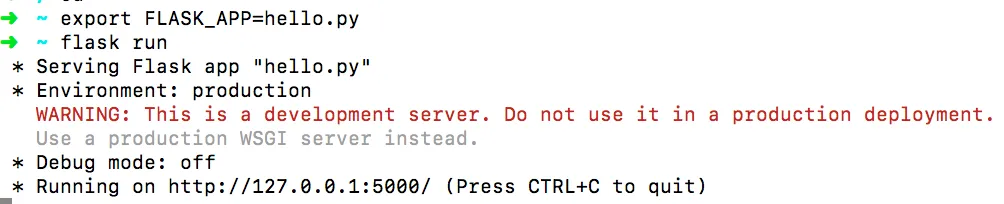
Test run:
export FLASK_APP=hello.py
flask run
You should see it running successfully:
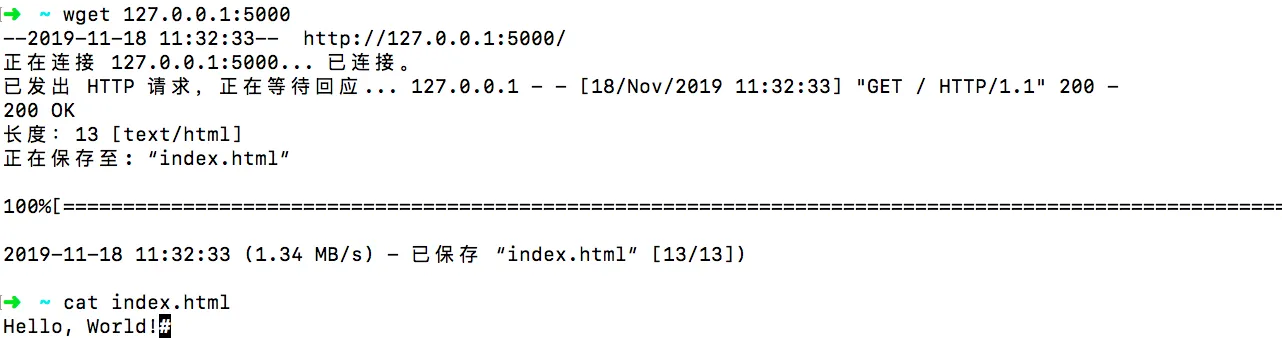
Test with wget:
Add to system services
Create a systemd service file, for example named flask_app:
touch /etc/systemd/system/flask_app.service
Write the following content into it:
[Unit]
Description=flask_app service
After=network.target
StartLimitIntervalSec=0

[Service]
Type=simple
Restart=always
RestartSec=1
User=www
WorkingDirectory=/opt/flask_app
Environment=FLASK_APP=hello.py
ExecStart=/usr/local/bin/flask run --host=0.0.0.0 --port=5000

[Install]
WantedBy=multi-user.target
Using WorkingDirectory and Environment directly in the unit file is usually simpler than wrapping everything in a shell script.
Start service and explanation of parameters
Start the service:
systemctl daemon-reload
systemctl start flask_app
systemctl enable flask_app
systemctl status flask_app
- Description: system service description
- After: runs after specified target, here after network is up
- StartLimitIntervalSec: the time window systemd uses when applying start-rate limits
- Restart: whether to restart after stopping
- RestartSec: wait time before restarting after stopping
- User: specify which user runs the program
- WorkingDirectory: the directory the program runs from
- Environment: environment variables passed to the process
- ExecStart: the command to run the service program, full path required
Just copy the install section as is…
Summary:
This article covers a common task: turning your own program into a systemd service and restarting it automatically if it stops. In real deployments, avoid storing the app under /root if the service runs as a non-root user.
- 原文作者:春江暮客
- 原文链接:https://www.bobobk.com/en/457.html
- 版权声明:本作品采用 知识共享署名-非商业性使用-禁止演绎 4.0 国际许可协议 进行许可,非商业转载请注明出处(作者,原文链接),商业转载请联系作者获得授权。