Python Generators and yield
yield with practical examples, including how generator execution pauses and resumes, when generators are useful, and a few common mistakes beginners hit.……
春江暮客的个人学习分享网站
yield with practical examples, including how generator execution pauses and resumes, when generators are useful, and a few common mistakes beginners hit.……
Today, while using Python’s Seaborn to plot a heatmap (clustermap), I kept encountering this error. My data seemed perfectly fine, and a Google search didn’t yield any good solutions. After some exploration, I’m sharing the final solution here.
Although the error appears inside Seaborn, the more common root cause is that the DataFrame being passed into plotting has become object dtype instead of a numeric dtype.
import pandas as pd
import numpy as np
import matplotlib.pyplot as plt
from seaborn import clustermap
import seaborn as sns; sns.set(color_codes=True)
df = pd.DataFrame([["a","b","c","d","e","f"],[1,2,3,4,5,6],[2,3,4,5,6,7],[3,4,5,6,7,8]], columns=list('ABCDEF')).T
df
g = sns.clustermap(df.iloc[:,1:],cmap="PiYG")
After generating and transposing the DataFrame, a TypeError occurs: TypeError: ufunc 'isnan' not supported for the input types, and the inputs could not be safely coerced to any supported types according to the casting rule "safe".

After implementing python for Qianqian Music mp3 download, some users found that many songs couldn’t be searched on Qianqian Music. So today, Chunjian Muke extended the download functionality to Kugou Music, with source code provided.
Using the same approach, first search for a song directly on the Kugou official website. Then, open the network monitor in Google Chrome and search for the same keyword again. You’ll then be able to find the API information (Note: It’s best to view the network requests during the second search to filter out unnecessary information).
With only 4 network requests, it’s easy to identify that the first request genuinely returns song information, so we can construct this request.

NetworkX, style edges by weight, and adjust background appearance for cleaner relationship visualizations.……
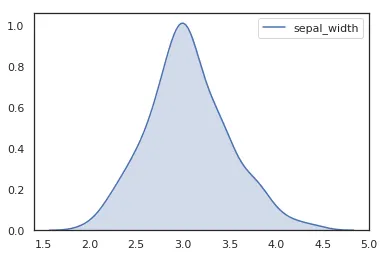
A violin plot is used to display the distribution and probability density of multiple data groups. Similar to a box plot, it offers a better representation of data density. Violin plots are particularly useful when dealing with very large datasets that are difficult to display individually. Python’s Seaborn package makes it very convenient to create violin plots.
If you only need the median and quartiles, a box plot is often enough. If you also want to see whether the data looks skewed, wide, narrow, or even bimodal, a violin plot is usually more informative.

The parameters corresponding to each position in a violin plot are shown above. The middle line represents the box plot data, specifically the 25th, 50th (median), and 75th percentiles. The thin lines indicate the 95% confidence interval.
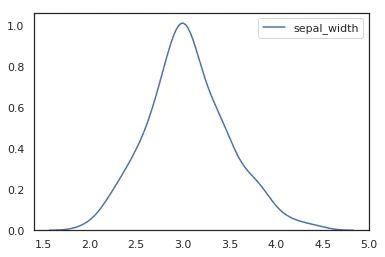
While a box plot would suffice for a single variable, a violin plot can certainly be used as well:
……
In Python, copying objects is common, and a lot of “why did both variables change?” bugs come from mixing up three different operations: assignment, shallow copy, and deep copy.

Among assignment (=), shallow copy (copy), and deep copy (deepcopy), the most confusing part is usually not assignment vs. copy, but whether a shallow copy still shares nested mutable objects.
Assignment does not copy an object. It only binds another variable name to the same object. Because of that, changes seen through one variable are still changes to the same underlying object.
A shallow copy duplicates the outer container, but nested mutable objects may still be shared. A deep copy recursively duplicates nested objects too, so it is usually more isolated.
A practical rule of thumb is:
Below is a practical code example illustrating the differences among the three.
……